Molluscum Contagiosum in Children: What Those Little Bumps Are, and How to Treat Them
Around one in ten children gets molluscum at some point. If you've just found a cluster of small, dimpled bumps on your child's skin and you're not sure what they are — or whether to do anything about them — this is for you.
I'm Dr Finbar, a GP with a special interest in dermatology. When I trained as a GP over twenty years ago, I was taught something simple about these bumps: leave them alone, they'll go on their own, no treatment needed.
That advice isn't wrong, exactly. But in the years since, I've learned how it feels from the other side of the desk. Many parents don't want to wait months — sometimes a year or more — for their child's skin to clear, watching the bumps spread in the meantime. So the real question isn't "do they need treating?" It's "what are the options if you'd rather not just wait?"
Quite a few, as it turns out — including a promising new treatment. Let's go through them.
What molluscum is
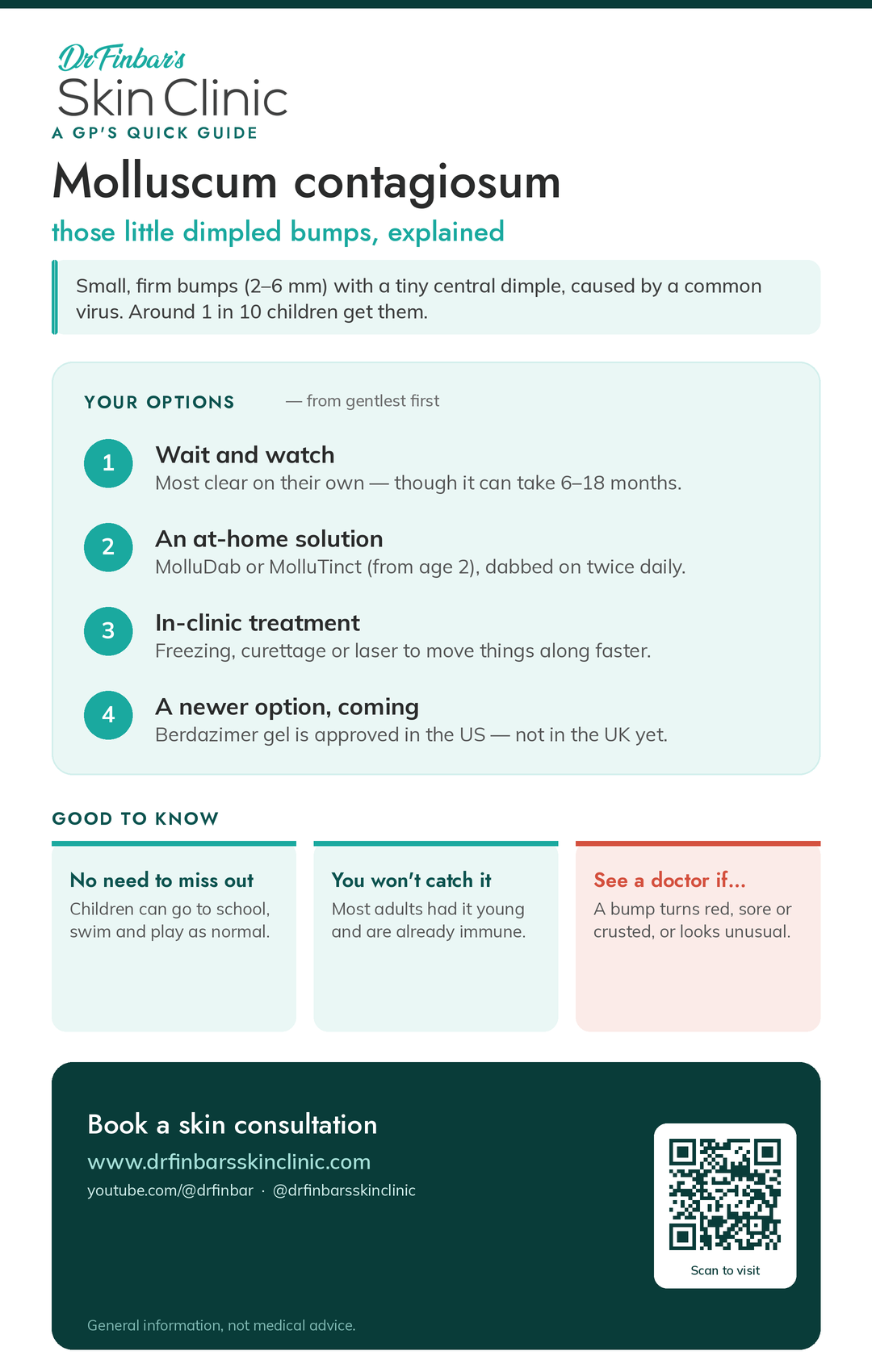
Molluscum contagiosum (molluscum for short) is a common viral skin infection. It shows up as small, firm bumps, usually two to six millimetres across, each with a tiny dimple in the centre — almost like a belly button. It's caused by a member of the pox virus family.
Because the bumps can vary so much from child to child, molluscum is easily mistaken for warts, acne, or inflamed hair follicles. That variability is part of why it sometimes gets missed.
And because it usually clears on its own, it's often waved away as nothing to worry about. If you've felt that your child's bumps were played down and you were sent home with no plan, I understand the frustration — that's a common experience.
How children catch it
Molluscum spreads mainly through direct skin-to-skin contact, and through shared items like towels.
One thing that surprises parents: the timing. After your child is exposed, it can take anywhere from two weeks to six months for the first bumps to appear. So it's often impossible to say exactly when or where they picked it up.
A couple of useful points:
- Children with eczema, or anything else that weakens the skin's protective barrier, are more prone to catching it and to it spreading.
- Most adults had molluscum themselves as children and are now immune. So if you're a parent, you're very unlikely to catch it from your child.
When to get it checked properly
For most healthy children, molluscum is harmless. But there are a few situations where it's worth a closer look:
- Lots of bumps in an adult, appearing out of nowhere. In adults, widespread molluscum can occasionally be a sign that the immune system isn't working as it should, and a doctor may suggest some checks.
- Bumps that are very large, or just look unusual. These may need a small skin sample taken to confirm what they are.
- A bump that's red, sore, weepy or crusted. Molluscum that's been scratched can pick up a bacterial infection, such as impetigo, on top. That needs treating in its own right.
Scarring can also occur — sometimes on its own, sometimes after treatment — which is one of the things to weigh up before deciding how aggressive to be.
Normally, though, a clinician can diagnose molluscum just by looking, sometimes with the help of a magnifying skin scope to confirm it.
Your treatment options
There's no single right answer here. The best choice depends on your child's age, how much the bumps are bothering them, and how you feel about waiting. Here's the full menu.
1. Watchful waiting. Doing nothing is a perfectly valid choice. The bumps will clear by themselves — but it can take six to eighteen months, and occasionally longer.
2. Creams and solutions you can buy without a prescription. In the UK there are two pharmacy products, both based on potassium hydroxide: MolluDab (5%) and MolluTinct (10%). In my experience the slightly milder MolluDab is usually easier to get hold of. In short:
- Suitable from around age two.
- Apply directly onto the bumps twice a day, morning and evening.
- It may sting slightly for a few minutes after applying — that's expected.
- Stop if a spot stays inflamed for more than twelve hours, or once you reach fourteen days of treatment. Then wait one to four weeks for the inflamed bumps to heal.
These work by deliberately irritating the bumps so they become inflamed. That flare-up is the point: it wakes up the immune system, which then recognises the virus and clears the spots.
3. Treatments done in clinic. Several procedures work on the same principle of provoking the immune system, including cryotherapy (freezing the bumps), curettage (gently scooping them away), and laser treatment. Freezing is very effective for adults and older children. In young children it's harder, because it can be painful and they understandably don't tolerate it well.
4. A promising new option (not in the UK yet). In exciting news, the US regulator has approved a newer treatment — berdazimer, a topical gel that releases nitric oxide, applied daily. It's shown good results and is even being studied for acne. As things stand, it isn't available in the UK yet, but it's one to watch.
A few reassurances for everyday life
Children with molluscum do not need to stay off school. They can still swim and take part in everything they normally would.
So here's the balance to strike. Molluscum is common and contagious, but for children and adults with a normal immune system it poses very little medical threat. What it can do is wear down quality of life — for the child, and sometimes for the parent watching and waiting. Any treatment has to weigh that against the downsides, since the treatments themselves can be uncomfortable and cause inflammation. Or you can simply let the bumps run their course and clear on their own time.
There's no wrong choice — only the one that's right for your child and your family.
I'm not paid by any company mentioned here, and product availability varies by region.
Worried about your child's skin, or want the bumps assessed?
At Dr Finbar's Skin Clinic we offer GP-led skin consultations and treatments including cryotherapy. If you'd like a clear diagnosis and a plan, book a consultation at www.drfinbarsskinclinic.com
Connect with Dr Finbar
Website: www.drfinbarsskinclinic.com
YouTube: youtube.com/@drfinbar
Instagram: @drfinbarsskinclinic
Facebook: facebook.com/drfinbarsskinclinic
LinkedIn: linkedin.com/in/drfinbar
This article is for general information and education. It isn't a substitute for personalised medical advice. Please speak to your own doctor or a qualified clinician about your child's individual circumstances.
Share this post on:


Copyright © Dr Finbars' Skin Clinic All rights reserved.